


We get really distracted by miasmas, y’all. We gullibly believe everything we’ve been conditioned to believe by a world around us that narrates fictions and sells them as documentary. We’ve become genuinely convinced that we’re islands, that each of us needs to look out for Number One or no one else will. And the sad thing about that? The more we believe this to be true, the more we MAKE it true.
How about we stop doing that?
Read on….

For You: Today’s Main Course
All of us in the United States are deep into election season.
And it’s a lot.
Have you noticed how, when something like an election is approaching, the hum in the air starts to reach a fever pitch? Like you can almost see the molecules vibrating all around you — and feel the same within you?
Yeah.
Things are a bit like that here.
With just over a week left, we’re seeing copious candidate debates aired… op-eds published… fundraising emails and texts overwhelming our inboxes… social media debates raging… and plenty of nasty attack ads (probably the worst of which has blown up over the past few days, ricocheting around the entire country and beyond from where it originated in Ohio, aiming to portray Amy Acton, a candidate for governor of the state, as a liar… and instead probably sinking her opponent once and for all, as he attempted to leverage the child sexual abuse she endured and her subsequent estrangement from her mother [who did not protect her daughter and remained married to her daughter’s abuser until his death], to record said mother questioning her daughter’s fitness for office… because the irony of that woman saying that about another woman who survived what she survived and went on to a successful life as a doctor and more has, thank God, seemingly been lost on no one, and no one seems to be buying what the ad was attempting to sell).
In the results of this Ohio story, I see some semblance of the justice and empathy we see so little of in our politics as they are today.
Isn’t it a bit hard to believe?!
But it hasn’t always been this way.
Once upon a time, my home state of Minnesota had a United States Senator who stood for a whole different kind of politics.
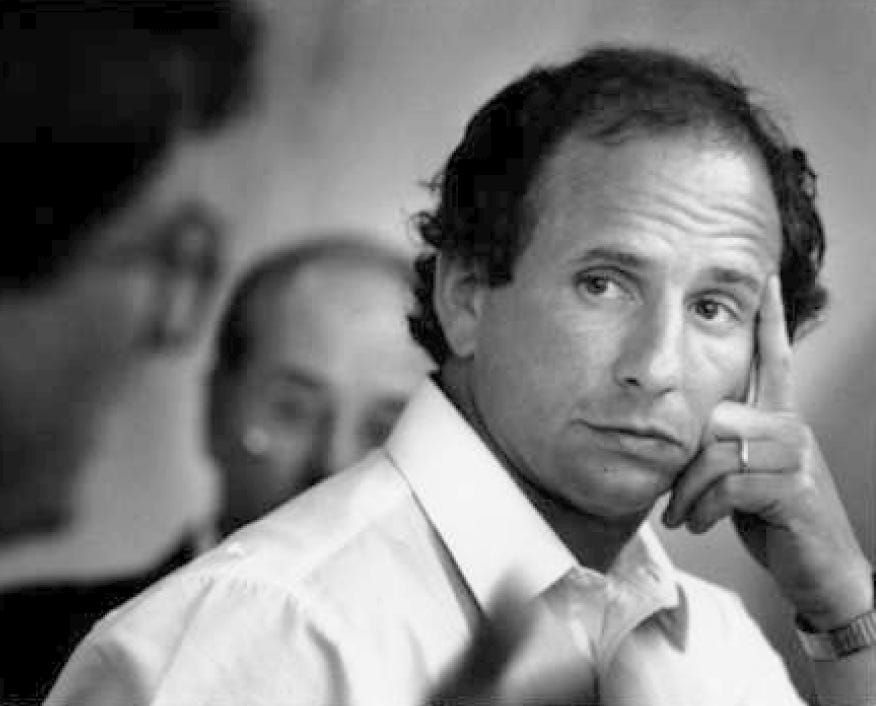
Paul Wellstone was the kind of politician who broke the mold:
He was a small-town college professor and community organizer until he was first elected as a U.S. Senator in 1990.
In that election, he was widely seen as an underdog, as he challenged a two-term incumbent who far outspent him (like seven to one), while he used scrappy, grass-roots tactics like traveling the state in an iconic bright green school bus.
In his upset victory, he gained national attention, as he was the only challenger nationwide to defeat an incumbent senator that year.
Throughout his two terms in that role, he was often called “the conscience of the Senate.”1
He saw his whole purpose in public life as helping people.
Wellstone was running for his third senate term in 2002 when he was killed — just eleven days before the election — in a plane crash in far northeastern Minnesota. This coming Sunday, October 25th, is the 24th anniversary of Wellstone’s death.
As we mark that anniversary this weekend, I think it’s worth reflecting upon how someone like Paul Wellstone would even relate to our political landscape today.
Who he was would probably either by completely illegible to so many people here in the United States today…
… and/or he’d likely be brutally skewered and attacked by those at the highest levels of our current federal government — a government that has made cruelty its calling card, selfishness a personality trait permanently tattooed onto its collective forehead, and disdain and disrespect for anyone who doesn’t fit the most narrow definition of “American” its passport to belonging in the club.
One of Wellstone’s most well-known phrases during his public life is oft-repeated, still, here in Minnesota:
We all do better when we all do better.
So simple…
… yet so easily misunderstood.
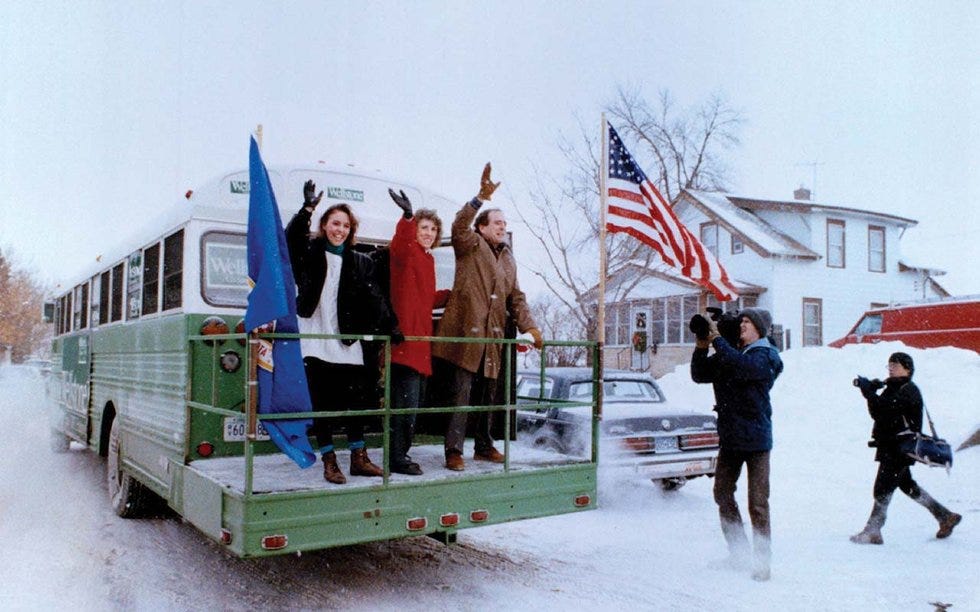
When my heart isn’t being broken into a million pieces by it, I find myself fascinated by the way we humans can take things that exist solely to ensure our collective well-being… and turn them into a zero-sum game.
We do this with “politics.”
We do this in “philanthropy.”
We do this all the time.
As I’ve written before here, “politics” is not some special brand of intrigue that only certain people participate in. If we’re human, we can’t not “do” politics, even though so many people love to say that about themselves. We “do” politics no matter what. We need each other. We are irrevocably interdependent on each other. Sometimes we give. Sometimes we receive. But always, we are inter-connected. And what we call “politics” is simply how we organize our collective life together.
In that way, there’s a degree to which philanthropy is much the same as politics and government. In fact, I’ve written about that here before too:
A country is a collective — by definition. And the collective of our country organizes itself, and cares for itself, via this thing we call government. In other words, our government is the means by which we the people care for ourselves and each other. In other words, our government is philanthropy.
We all do better when we all do better.
This is not just a nice campaign slogan.
This is axiomatic.
Yet somehow — despite the “inescapable network of mutuality” that we’re a part of, according to Dr. King; despite these active realms we’ve created, ones we call things like “politics” and “philanthropy,” that allow us to care for each other collectively; despite the undeniable fact that any one of us humans will always have far more in common with every other human than we’ll ever have alienating us from each other…
… we seem to keep convincing ourselves that only some of us can do better at any one time, so we better fight each other for resources, and then we better hoard those resources for ourselves, and then we better come up with all kinds of reasons why those other people aren’t worthy of access to any of the resources…
… or, at the very least, we’re convinced people have to prove their worthiness with at least 20,000 words or credit reports or sobriety or “matching” grants or the right degree from the right institution or a y chromosome or the proper costume or going along with the cruelty or not asking too many questions or buying into the status quo because doing otherwise would disrupt too many things and too many people.
Isn’t it all so tiring?
Isn’t it all such a waste of energy?
Why do we do this to ourselves?
We all do better when we all do better.
When I thrive, you thrive.
When you thrive, I thrive.
All thriving is mutual.
We all do better when we all do better.
Like, for real for real.
This is the truth.
This is the actual reality we live in — despite how much we keep trying to convince ourselves otherwise.
So.
How about we start acting like it?
Subscribe… or Become a Supporting Subscriber!
Become a Free Subscriber, and you’ll get a loveletter missive like this in your inbox on Fridays — in addition to podcast episodes when they drop…
… or become a Supporting Subscriber and you’ll get the above… PLUS you’ll have these additional opportunities to participate in this community:
➡️ short (5-15 min) Morning Meditations available to you every weekday (on a private podcast feed that you’ll have access to);
➡️ monthly Fire Circle (story-telling) gatherings with the Supporting Subscriber community, via Zoom;
➡️ and online chats with the Supporting Subscriber community right here on Substack, including our Asynchronous Content Club (think a book club, but asynch and with LOTS of different types of content that y’all suggest);
… and perhaps most importantly, as a Supporting Subscriber, you’ll help provide the financial support needed to make For the Love of Humanity sustainably possible.
Conversation: Your Real Real
I really want to know your more detailed and nuanced thoughts, too. Let’s start a conversation on this topic. Visit the comments section!
You’re a Fundraiser? Find the Community You Need Here
Life’s been LIFING lately, yes?! Now is the time to reach out and connect with others. When you’re embedded in supportive community, even the most difficult things don’t seem so hard.
Your community is waiting for you!
Advice when you need it. Been-there, done-thats. Commiseration. Support. A place to vent. Guidance. Mentoring.
All of this — and more — is what happens each month…
… at Community-Weaving for Fundraisers.
Just community-based fundraisers. Gathering for (virtual, on Zoom) lunch together. Twice a month. Year-round. Chatting and supporting each other via WhatsApp in between lunches. Being there for each other.
All you need to do is show up and be present… while I guide, facilitate, organize, and create the container.
Practice: Make It Yours
Here’s your mission, should you choose to accept it:
Step away from the social media, the fundraising emails and texts, the arguments, the drama of “politics” for a few moments.
Reflect on a time you felt like an integral part of a collective of people.
What were you doing?
What helped you really feel a part of the collective?
Was there anything the other members of the collective did to help you feel like you belonged within it?
Were there any ways that you helped others feel a part of it too?
Really reflect on what the “magic sauce” was.
Then:
Ask yourself: how can I create that again, now, in my current life?
A Gift: Something to Take With You
Politics is not just about power and money games. Politics is about the improvement of people’s lives — about lessening human suffering in our world and bringing about more peace and justice.
— U.S. Senator Paul Wellstone
July 21st, 1944 - October 25, 2002
For the Love of Humanity is an online community made up of, and generously supported by, its readers and listeners (like you).
Why become a Supporting Subscriber?
➡️ Receive a loveletter like this every Friday evening. ➡️ Receive new podcast episodes right in your inbox when they drop! ➡️ Listen to (5-15 min) Morning Meditations every weekday in a private podcast feed, wherever you get your podcasts. ➡️ Join monthly Fire Circles, via Zoom, to share stories in community. ➡️ Participate in Asynchronous Content Club (like a book club, but asynch and with content far beyond books as suggested by the community)… in the Substack Chat. ➡️ Affirm and invest in the value of true philanthropy in your life. ➡️ Provide the financial support needed to make this hopeful project possible… and to help it continue… and grow!
Find For the Love of Humanity elsewhere and join us there too!
➡️ LinkedIn | Facebook | Instagram | Threads | BlueSky ⬅️
Ireland, Mark (September 1, 2008). Paul Wellstone: Conscience of the Senate. St. Cloud MN: North Star Press. ISBN 978-0878392902. Retrieved August 27, 2024.