


As the Association of Fundraising Professionals organizes celebrations for National Philanthropy Day this month, I think it’s worth reflecting on the differences between “fundraising” and “philanthropy.” And I’m also arguing that I think we fundraisers should maybe dispense with the whole practice of “fundraising”… in favor of practicing “philanthropy” instead.
What do I mean by this exactly?
Read on….
For You: Today’s Main Course
We don’t always fully consider our habits.
Take one annual habit happening right now. November is the month that communities all over — including my own here in the Twin Cities — hold National Philanthropy Day celebratory events.
Every year, National Philanthropy Day (NPD) is marked and celebrated by the Association of Fundraising Professionals (AFP) — which to some people may seem like a mismatch, since we tend to think of “fundraising” as one thing… and “philanthropy” as another.
And actually, yes, over the years, since NPD was started in the 1980s, its events have tended to hew to the worst parts of fundraising — a room full of people applauding rich (usually White) people — than the best parts of what is actually “philanthropy.”
Some of us have been trying to address the problem. I remember how, during my stint on our local AFP board, we started completely changing what our NPD event looked like — especially who and what we celebrated.
Gone were the expensive rubber-chicken lunches and videos honoring the rich folks — and the speeches they had typically given too.
In came honorees like Nur-D, a local rapper (who I absolutely adore, and who had actively served as a street medic during the chaotic and extended uprising for racial justice, which ricocheted around the whole world from its epicenter here, after George Floyd’s murder in May 2020)… the Ain Dah Yung Center, a local org housing and providing a sense of “family” and belonging for Native youth without those things… and the Headwaters Foundation for Justice, which for decades has been mobilizing our community to fund and support movements for justice — which of course will completely change conditions requiring charity and thus resolve the need for charity in the first place.
From an event that felt stuffy…
… we got one that felt alive with community.
From reinforcing the inequities in our community…
… we went to elevating those often on the margins.
From celebrating the fundraising and the money more than anything…
… we moved to celebrating a truer philanthropy.
And you wouldn’t believe the complaints we got!
Sure, humans resist change.
Like, all the time.
We know this.
So it shouldn’t really be surprising that humans would resist change in something like this too… right?
Sure.
And…
We were pretty aghast to hear complaints from folks who “thought the quality of the honorees had really gone down,” and the like.
Y’all, this mindset is a real problem.
And it tends to be fairly endemic within the world of fundraising.
Fundraising has become far too focused on money, over the years.
Heck, it’s right there in the name!
And because of how much this is true, I’m calling us to start leaving fundraising behind… and embrace philanthropy as our purpose.
I’m not talking about Big Philanthropy, here.
Institutional Philanthropy? Foundations? Corporate Giving? Grants? Logic Models? Endowments? Wonky power dynamics?
Nope.
I’m talking about the true, root meaning of “philanthropy” here:
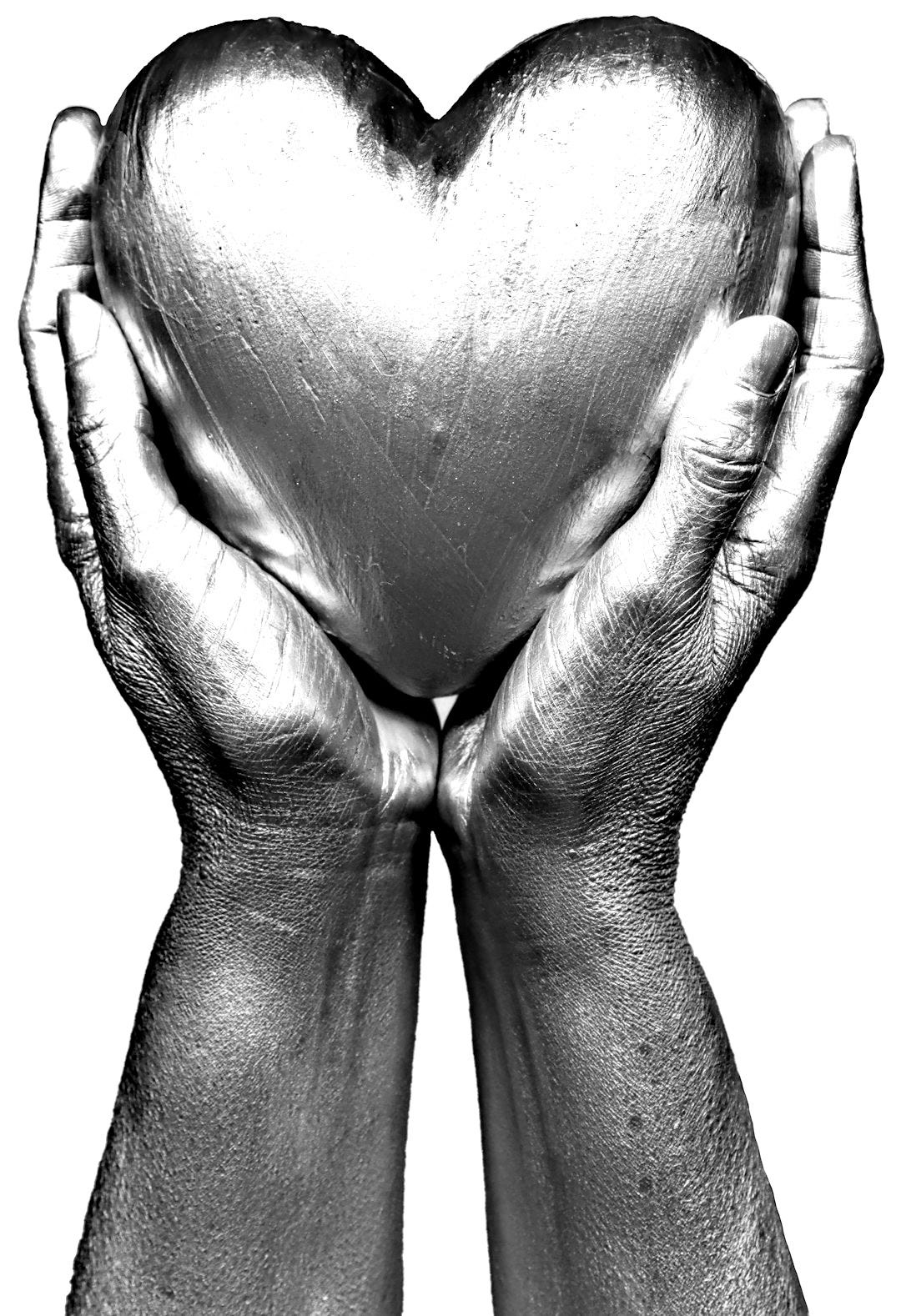
There is nothing else quite as lovely as the experience of being in community — feeling your heart, mind, and whole being tune into the joy of connection and care within a group, a sense that is as much about receiving as it is about giving.
This is philanthropy.
The roots of the word philanthropy are Greek: philos, meaning love (think Philadelphia, the “City of Brotherly Love”), and anthropos, meaning humanity (think anthropology, or the scientific study of humanity).
And I have some suggestions to get us started on the process of moving from fundraising… to philanthropy:
From “Prospects”… to Potential Donors/Supporters/Friends: In general, as we practice philanthropy, we need to center the humanity of these humans with whom we’re spending time and growing relationships. And one of the ways fundraising consistently fails to do that? Calling human beings “prospects.” Some of the connotations of this word harken to the Gold Rushes of history. So yes, it calls to mind an almost frantic yearning for material wealth. And in general, the way it’s used, it cheapens and transactionalizes the relationship-building that happens in the early stages of getting to know potential supporters. Because a “prospect” sounds more like a source of money than it sounds like a living, breathing human being carrying a universe within them. A “prospect” doesn’t really sound like a person you’re hoping to get to know and care about. A “prospect” sounds like someone you’re gonna get something from and not someone you’ll be sharing a lot with. Don’t you think?
From “Linkages”… to Connections: Here again, let’s use the actual language of human relationships in this work. One of the classic fundraising ways to refer to a connection between a person and an organization is a “linkage.” Doesn’t that sound dry? I’d say it sounds far more like a machine than a human being. In the work of philanthropy, we aren’t seeking out or creating “linkages.” Rather, we’re seeking out and growing connections with people. We may seek out an introduction to them through someone else we’re connected to… who is connected to them too. And once we’re introduced, we seek to grow our own connection with them. We seek to get to know more and more about who they are. We seek to understand them. We appreciate them. We care about them. We value what they bring to our lives. We hope they value what we bring to theirs too. In this way, we’re growing real human relationships with them.
From “Interest”… to Values Alignment: Another classic fundraising assessment is whether a “prospect” has “interest” in our cause. Again, this seems dry and mechanical to me. Let’s acknowledge that philanthropy is inspired and motivated by hearts, by values. Let’s remember that no one is going to give a gift of any kind philanthropically if the mission doesn’t align with their values. Let’s make sure all of our focus is on whether or not that values alignment is there with a person — because even if we think they’re “interested” in our work, the chances of them giving a meaningful philanthropic gift are not actually high unless their values are aligned with ours. Our hearts and values really do need to be well-aligned with the people we draw into our community of supporters, or we are effectively just treating them like ATMs providing our lunch money. If we’re not rowing in the same direction as our supporters, seeking the same values and ultimate outcomes in the world, we are effectively “using” them for their money while hoping the things they care about don’t happen. What kind of relationship is that?
From “Ability” or “Amount”… to Commitment to Giving: The third classic fundraising assessment we make is for a “prospect’s” “ability” or “amount” that we think they can give. This is part of why I’m saying we put the money above all else in fundraising — because this consideration is one of the most influential as to whether or how we engage with a “prospect.” And that is just so backwards, when it comes to philanthropy! This is especially true because someone with a lot of wealth may have no desire to give anything. Or someone who seems modest may give a huge percentage of what they have. Rather than focusing on dollar amounts, I propose we focus on a person’s commitment to giving (or the like). We can use clear delineations like low, medium, high, or other designations. But whatever we do, we should stop focusing on the dollar signs… and start homing in on peoples’ hearts and the strength of their commitment to our work. And FWIW, let’s definitely stop having this consideration have anything to do with our calculation of someone’s “net-worth.”
From “High Net-Worth”… to High Net-Wealth: As you can see, I’d prefer we aren’t focusing on people’s financial assets too much anyway, but if we are going to discuss them, can we please dispense with the term “high net-worth” in relation to a human being? Hear me on this one: every single human being has high net-worth. For real. Every. Single. Human. There is no such thing as a human that has a higher net-worth than another human. So if we must use this indicator, can we please refer to high net-wealth instead, since that is actually what we’re measuring and talking about?
From Sorting By $$ Levels… to Resources to Give: For people who always talk about how much we value relationships with donors, we sure don’t act like it in how we organize them behind-the-scenes. Almost every data point we use to segment and sort our donors revolves around the $$ they give (or could give). Tell me this: how would you feel to be in a “relationship” with someone who has sorted you in a spreadsheet according to how much money you make in relationship to their other friends? Not so great, right? Here again, I’m suggesting that we de-prioritize the money, to focus on all the many resources a human can offer and share with us and our work (or what many of us like to call “The 5 T’s”): Time, Talent, Treasure, Testimony, and Ties. And we should genuinely care about and value every single one of those things. At least, we would if we actually value this human being and our relationship with them above all else.
From “Annual Giving”… to Collective Giving: If you’ve spent any time at all around fundraising, you’ll know that “annual giving” is usually the term given to all kinds of financial giving that falls into the broadest bucket. The wild thing about this is that this language gets us fundraisers into the mindset that donors should be giving at least once every calendar year. But that is not really how peoples’ lives go. For instance, if a donor hasn’t given since last calendar year, we fundraisers have a term for them: “lapsed.” But you know what? I highly doubt that donor thinks of themselves as lapsed. They still think of themselves as a donor to your org! They probably don’t even remember the last time they gave. Life has been lifing for them. And even more, the way we approach donors in “annual giving” is literally built upon a foundation of the skills and best practices of commercial direct marketing. So since these have now become our “best practices” too, we are literally treating our donors like commercial customers. That is how we’re relating to them in almost every way, as we do our “annual giving” work. In contrast, I’m proposing we start to normalize collective giving as the most grassroots mode of giving to our orgs. And what is the reality of collective giving? Relationships. Community. Belonging. Supporters actually being a part of our team. Us being in ongoing, authentic, human-to-human community with donors. That’s quite different than us being marketers relating to them as data points much like customers… yes?
From “Major/Mid-Level Giving”… to Donor Organizing: Major and Mid-Level Giving tend to be some of the most problematic parts of fundraising-as-it-is right now. Because again, we’re focusing on the money here. The only way someone becomes a “Major” or “Mid-Level” donor usually is because of how much money they’ve given. That is our definition of these categories. Then, not only are we grouping these folks together because they give the most $$, we shower them with the most attention of all of our supporters — which means we’re re-enforcing problematic realities in our unjust society that center and give attention to those with the most privileges and resources… while marginalizing those who have fewer of the same. Instead of this approach, I’m proposing that we use a process known as “Donor Organizing” to structure or 1:1 relationships with supporters. Donor Organizing focuses on human beings and their values — and the gifts they give are whatever is “meaningful” for them. 1:1 conversations are profoundly powerful ways to build relationships… so I think it’s wild that our “best practices” are to only have these conversations with one narrow group of people, one determined by money and wealth only. I think it’s high time that we have these conversations with folks who are our truest believers… don’t you?
From “Prospect Research”… to Donor Stories: Am I the only one who thinks it’s actually kind of gross that we fundraisers have programs that give us raw data about people we’ve never met, data that is hella intimate and private? I don’t like it. I think it’s fairly creepy. I think that, if donors knew how much information we have about them, they’d likely revolt. Rightfully so, I say! And I don’t see why this is even necessary! Why should we pay for a program that gives us all kinds of information about someone they’d never want us to have… instead of just growing an honest, open, authentic relationship with them… and learning their story in the ways they want us to hear it?
What do you think?
How do these land?
Do you have other examples?
I’d LOVE to hear your thoughts….
Have you wished you could have a coach or consultant to help you with your fundraising… but didn’t think you could afford it?
So do many people. And that’s why I created the Wisdom Circle for Philanthropy — a way for you to not only get the professional guidance and support you need, but also to find the kind of community that brings you joy, belonging, and the sense of having “your people” in your corner that so many fundraisers lack. Ask me how I know. I’ve been there!
➡️ Bring your work to the Circle for feedback, guidance, and coaching. Get help getting your actual work done, while learning and building your skills. Learn by doing: how to turn your fundraising… into philanthropy.
➡️ Get a 1:1 Coaching Session with me once every quarter (we follow a Winter, Spring, Summer, and Autumn rhythm).
➡️ Engage in the WhatsApp community in-between our face-to-face, voice-to-voice sessions on Zoom, and you’ll have the community and support and guidance you need whenever it arises.
The next onboarding opportunity for the Wisdom Circle for Philanthropy is approaching: in January 2027.
Conversation: Your Real Real
I really want to know your more detailed and nuanced thoughts, too. Let’s start a conversation on this topic. Visit the comments section!
You’re a Fundraiser? Find the Community You Need Here
Life’s been LIFING lately, yes?! Now is the time to reach out and connect with others. When you’re embedded in supportive community, even the most difficult things don’t seem so hard.
Your community is waiting for you!
Advice when you need it. Been-there, done-thats. Commiseration. Support. A place to vent. Guidance. Mentoring.
All of this — and more — is what happens each month…
… at Community-Weaving for Fundraisers.
Just community-based fundraisers. Gathering for (virtual, on Zoom) lunch together. Twice a month. Year-round. Chatting and supporting each other via WhatsApp in between lunches. Being there for each other.
All you need to do is show up and be present… while I guide, facilitate, organize, and create the container.
Practice: Make It Yours
Here’s your mission, should you choose to accept it:
Consider the bulleted list I made above re: transforming your “fundraising” practice… into a “philanthropy” practice.
Really reflect on the different energy in these new, more philanthropic approaches I’m suggesting.
Consider which of these you can try right away.
Consider which you may need to work towards.
Consider sharing these with your team.
Respond in the comments and let me know how it goes!
A Gift: Something to Take With You
For the Love of Humanity is an online community made up of, and generously supported by, its readers and listeners (like you).
Why become a Supporting Subscriber?
➡️ Receive a loveletter like this every Friday evening. ➡️ Receive new podcast episodes right in your inbox whenever they drop! ➡️ Listen to (5-15 min) Morning Meditations every weekday in a private podcast feed, wherever you get your podcasts. ➡️ Join monthly Fire Circles, via Zoom, to share stories in community. ➡️ Participate in Asynchronous Content Club (like a book club, but asynch and with content far beyond books as suggested by the community)… in the Substack Chat. ➡️ Affirm and invest in the value of true philanthropy in your life. ➡️ Provide the financial support needed to make this hopeful project possible… and to help it continue… and grow!
Find For the Love of Humanity elsewhere and join us there too!
➡️ LinkedIn | Facebook | Instagram | Threads | BlueSky ⬅️