


Did you notice that I wasn’t in your inbox last Friday? Yeah. I just… couldn’t get this piece out without a bit more time to let it simmer and develop. Also, I was pretty consumed with final preparations for our inaugural For the Love…! event, which just happened this past Wednesday. (More on that next week, but I’ll let you know that it was a soulful, joyful, meaningful gathering. I want to say THANK YOU to all of you who came… and I hope more of you can come next time!)
Anyway, I knew I had to write about this topic… because it’s been organically coming up in SO many conversations, in SO many different settings lately. Friends, this topic is SO very important, and it’s something that many of us are struggling with.
Read on….

For You: Today’s Main Course
Y’all, we struggle with conflict.
Like struggle-struggle.
Like we suddenly found ourselves on the I-don’t-know-how-to-handle-conflict-struggle-bus long ago and, over time, the forces of entropy and inertia have meant that we’ve not-only not ever left the bus, but we’ve grown such roots into its seats and floors that we have become a part of it — which doesn’t bother us, really, because we never really intended to leave anyway.
We don’t know any better, really.
And there’s not really anyone around to show us a better way.
Do you know anyone who’s “good” at conflict?
Someone who appreciates it?
Someone who approaches it in a healthy way?
My guess is no…
… because there are so few people like that.
There’s a reason we see so much unhealthy conflict all around us — whether in friendships, or in romantic partnerships, or at work, or in community groups, or in government: we weren’t ever taught any other way.
And if seemingly no one knows a better way…
… how are any of us ever going to find it?
Over the years, I’ve gotten better at conflict. But I had to learn my lessons the hard way, and pretty much on my own — since, again, I didn’t really have anybody stepping forward to show me the way.
So today, I want to share with you some of the truths I’ve learned about conflict — truths that, if more of us believe and embody them, have the potential to completely transform our world. I’m serious.
Conflict Is 100% Inevitable In Relationships
So many people I’ve known through the years seem to have the idea that a “good” relationship is one without conflict.
Nothing could be further from the truth.
A good relationship embraces conflict — because there is no way two or more human beings can be in relationship with each other and never step on each others’ toes or disagree on anything. That’s just not possible.
We will step on each others’ toes.
We will disagree.
Being human and being in relationship means that there will be conflict.
The most honest questions to ask are what type of conflict there will be… and how the members of the relationship will handle it.
So to be clear, if a relationship “doesn’t have conflict,” that just means that conflict is being stuffed down and/or avoided.
And that will never end well.
Avoiding Conflict Doesn’t Make It Go Away
You realize that avoiding conflict doesn’t make it go away, right?
That feels like an obvious statement to me… but, given how so many people behave in relationships, I have to assume that it’s not obvious.
In fact, avoiding conflict often makes its drama increase.
Conflict creates many things as it develops and remains unaddressed.
Resentments.
Hurt feelings.
Grudges.
Misunderstandings.
Judgements.
All those things then exist within us as live energies, energies that actually take up space within our beings — energies that are as real and affecting as the blood pulsing through our veins.
If we don’t openly acknowledge conflict…
… those energies don’t cease to exist.
In fact, what is more likely is that they will increase, the more that they are ignored and stuffed away. Indeed, the natural tendency of energies like this is to grow and dig in and become more rooted and rigid, the longer they go unaddressed and unresolved.
And when that happens?
Those energies within us create energetic walls between us and the other(s) with whom we are in conflict.
What does that mean, you may be asking?
Reflect on your own experiences.
If you’re mad at someone and don’t want to tell them why… are you able to let love flow from within you…toward them?
No, right?
There is no-to-significantly-reduced energetic flow between you.
There is stagnation in your relationship.
You isolate. And they isolate. And they have no idea what’s going on with you, nor how they might have hurt you… and you have no way to communicate the hurt to them… and if you’re not communicating it, you have no way to resolve it.
So it persists.
And it grows.
And it hardens.
What it doesn’t do?
Go away.
Conflict Doesn’t Have to Blow Things Up
Hey, I get it.
I absolutely get why people avoid conflict.
We have $#!+ experiences with conflict.
Many bad experiences, usually.
Most of us learned early on in our lives that conflict means drama… and people stomping all over us and our needs… and getting hurt… and being unfairly judged… and being misunderstood… and being hated or rejected… and more horrible things that are essentially the worst of human experience.
There are reasons we’re afraid of conflict — good reasons.
There are reasons we avoid it at all costs…
…reasons we think it’s bad…
…and reasons we think it ruins relationships…
…because that’s what we’ve seen, again and again.
This is an understandable and justified conclusion, given the evidence!
And yet…
… this conclusion is deeply flawed and mistaken…
… because it doesn’t draw from what’s actually the truth.
Just because we haven’t seen the truth yet doesn’t mean it doesn’t exist. And the truth is that conflict doesn’t need to actually blow everything up — and thus we don’t have to avoid it like a ticking time-bomb.
Conflict Can Actually Bring Us Closer to Each Other
If I tell you that conflict can actually bring us closer to each other, what do you think? Do you think I’ve gone mad?
I’d understand if you do.
Because again (see above), our dominant culture gives us scarce-to-nonexistent examples of healthy conflict.
So if we’re paying attention to the world around us, we’ve taken our notes, and we’ve drawn conclusions as a result, we will definitely not arrive at the belief that conflict can be good in relationships.
But do you see the fallacy therein?
We are basing our beliefs on severely limited data.
The world around us is clearly limping along.
Humanity is very obviously struggling to relate in healthy ways to our planetary home, let alone to each other. If we’re honest, we’ll admit that there seems to be a lot we have yet to learn, as human beings, about how to live on this planet with each other.
Think about it like this.
If a group of toddlers is crawling around on the floor together, and they never have any older people around them (an absolutely unlikely situation, I’ll admit, but go with it to see this metaphor through), they’ll have no idea that walking is even an option… so they’ll likely never try it.
This is a bit like how we adult humans are with conflict.
Some of us have tried getting up onto two feet… and fallen back on our bums… or fallen and hit our heads… or otherwise gotten hurt… so, even if we were game to try, we were often quickly dissuaded. And I’ll be honest, I can probably count on one hand the humans I’ve met who kept trying until they actually learned to walk.
So how about we at least talk about walking?
Look at it this way.
We’ve talked about how avoiding conflict just ends up creating (invisible-to-the-eye, but very-energetically-real) walls between people.
So what would be the alternative?
The alternative would be dissolving the walls…
… by deciding we value the relationship more than the walls.
And how do we do that?
Well (and I speak from experience, here), those walls can only dissolve when you give their realities a voice… and then you experience yourself being received by the ones with whom you’re in relationship. And if they respond to you in a way that honors you and your experience… and expresses empathy… and genuinely apologizes for any harm they brought to you… it’s amazing how quickly that wall of energy can transform… into connection and intimacy and love.
Now, don’t get this twisted.
When I talk about connection and intimacy and love, I’m not referring to romance. These things can — and do — exist outside of romance. In fact, experiencing these things outside of romance, even in professional settings, is something we rarely acknowledge as possible (even though it is).
Connection and intimacy and love flow between people who are held within containers of honesty, vulnerability, and mutual empathy and care. Note: these containers must be leak-proof. These qualities are not optional, or the whole thing crumbles.
In relationships where this is possible…
… honesty must be non-negotiable and mutual…
… as must vulnerability…
… as must empathy and care.
When we have taken the risk to share an honest, vulnerable part of ourselves with someone…
… and they have received us with empathy and care…
… and they have shown us that we can trust them with that part of us…
… suddenly, there’s a whole new, powerful flow of relationship between us, one not encumbered by taboos or secrets or can’t-go-there topics. At that point, even more love is possible between us, and more love is likely to flow between us freely.
Now, let me say more about what I mean by “love” here….
Our Relationships Can Contain Conflict, Within Love
Love is another thing we rarely understand in our dominant culture.
There are lots of messed-up things people do to other people, after they have declared that they “love” them.
There are lots of twisted things people are talking about, when they’re using the language of “love” for another person.
For many of us, love that actually feeds us and cares for us — the full and real and not-toeing-any-lines-to-earn-acceptance version of us — is either something that seems imaginary… or only applies in certain narrow circumstances… or is something that is only for other people, not us.
For many of us, a love that is universal is fiction.
For many of us, a love that is unconditional is a pipe dream.
For many of us, a love that holds us and nurtures us no matter what we might do or say, or how badly we might screw up, is something we’d never dare wish for.
Few of us know love like that.
And honestly?
Only a few of us will continue to know this love… until a critical mass of us starts looking within ourselves for it — which is where we’ll finally find it.
How can any of us love someone else well… if we haven’t first learned how to love ourselves, so we can experience love deep within? If we don’t know love from experience, it’s a heckuva lot harder to share it.
Think about it.
All of us humans are running around the planet looking for someone, somewhere who can love us the way we want and need to be loved… while meanwhile, most of us haven’t shown any dedication to loving ourselves first. So to be clear: everyone’s looking for something outside of themselves… that no one else can really give… until they know what it is, from experience.
How are any of us going to know love from experience… if the places we’re looking for it are people who are also looking for it (and yet to find it)?
We are made to love.
(That’s why we’re so driven to seek it.)
Love is the most essential quality of our beings.
From the moment we’re born, we’re love embodied… and, unfortunately, this world has a way of ensuring we forget that.
So our work is to remember.
The primary way I learned to remember this myself is through practicing meditation. There’s a reason I provide Morning Meditations for Supporting Subscribers of this community: I want to help you have this experience, too. Spending regular time in stillness and contemplation within ourselves helps us remember and re-connect to the love at the core of our beings — which helps us feel loved in a way that’s hard to otherwise.
In addition, another great way to remember who you are (and by that I mean to remember that you are love)… is within relationships that are committed containers of everything I’ve mentioned:
honesty;
vulnerability;
mutual empathy and care.
Why do I use the word container?
Because conflict needs to be held within a commitment of honest, vulnerable, mutually empathetic and caring relationship for it to exist without becoming a bomb.
The power and tension of conflict often expands outward. And if there aren’t clear boundaries to contain the power and tension — boundaries that are held and strengthened by the commitment of each member of a relationship to staying in honest, vulnerable, mutually empathetic and caring relationship with each other member of the relationship — it will explode. Eventually. And/or someone will walk away, and the container will be broken.
The commitment to each other must be there, for conflict to be productive and not simply destructive.
And the commitment of each individual to actively cultivate love within and for themselves must come before anything else.
Is any of this easy?
No.
Is the challenge worth it?
100%.
Is this actually how and who we were made to be, as human beings?
Why yes, it is.
Is this why we can experience such deep joy, when we do this?
Also yes.
All of This Takes Practice
Even though we’re born to love and can actively beam out love from our first shared gazes with our caregivers (when we’re not sleeping or crying or eating or pooping in our diapers)… the process of developing and growing from a baby human to an adult human generally involves a dampening and/or burying of those love beams shining out from within us, as life here on Earth is generally not easy, and we generally start to feel pretty chastened by it pretty quickly.
This is why we need to actively practice remembering, as adults.
Meditation is one way to practice.
Embracing conflict within loving, committed relationship containers with other human beings is another great way to practice.
So.
Do you see what I mean, when I say that conflict isn’t the enemy?
Conflict is actually our friend, because of the ways it helps us learn to love ourselves… communicate our deepest truths… be vulnerable with other human beings… and deeply connect in mutually empathetic and caring relationships with other humans, which is (spoiler alert) essentially the best parts of being human.
Even more, if/when we can do this with each other…
… this is actually the way we can most effectively collaborate with each other to create the better world we all seek.
And, since none of us can actually do that alone, and since most of us would like to see a better world, it sure seems like practicing healthy conflict is a pretty important to-do item, wouldn’tcha say?
Let’s start practicing together.
We will mess up.
And we can try again…
… and again…
… and again.
Because we have each other.
And we’ll commit to each other.
And that’s all we need.
Grow Your Empathetic Leadership, In Community
Are you an equity‑minded leader — with “leader” defined broadly here and not limited to positional leadership? Are you holding a lot of conflict, harm, or complexity in your role? Do you want language, tools, and support to lead without self‑erasure?
Have I got the opportunity for you.
From my very first conversation with Nneka Allen, she has helped me grow as a human being. Nneka is the embodiment of SO many good — yet seemingly contradictory — things. She is soft, yet fierce. Empathetic, yet holds you accountable. Uplifting, yet grounded. She is a wise, loving guide for your journey, the kind of guide you see, looking back with hindsight, changed the whole trajectory of your life for the better.
She is soon launching The Empathetic Nonprofit Leader Lab: an eight-week cohort experience starting September 22.
And I have a funny feeling some of y’all should be joining it.
So I want you to seriously consider it, if you feel at all lit up by the sound of this opportunity.
✨And this might seem a little weird…✨
…but I have special links for you to use if you decide to go for it, ones Nneka gave me so that she can track that you came from my recommendation.
Use the buttons below to sign up.
☺️
Conversation: Your Real Real
I really want to know your more detailed and nuanced thoughts, too. Let’s start a conversation on this topic. Visit the comments section!
You’re a Fundraiser? Find Your Community Here
Life’s been LIFING lately, yes?! Now is the time to reach out and connect with others. When you’re embedded in supportive community, even the most difficult things don’t seem so hard.
Your community is waiting for you!
Advice when you need it. Been-there, done-thats. Commiseration. Support. A place to vent. Guidance. Mentoring.
All of this — and more — is what happens each month…
… at Community-Weaving for Fundraisers.
Just community-based fundraisers. Gathering for (virtual, on Zoom) lunch together. Twice a month. Year-round. Chatting and supporting each other via WhatsApp in between lunches. Being there for each other.
All you need to do is show up and be present… while I guide, facilitate, organize, and create the container.
Practice: Make It Yours
As I mentioned, your ability to live in right relationship with others is deeply dependent on your ability to experience love within yourself first.
You have to know it to be able to give it, right?
So.
Let’s practice loving ourselves.
Find a place where you won’t be disturbed.
Ground yourself with some deeeeeeep breaths.
Then, ask yourself these questions… and (this part is very important) pause, get quiet within yourself, and really listen for the answers:
What do I most need in relationship with others?
How do I feel loved?
How can I best love myself today?
Once you’ve heard your answers, respond accordingly.
Loving yourself is caring for yourself in the way(s) you most need care. So don’t hesitate. Get your answers. Find out what you most need. And then dedicate yourself to creating the conditions within which you can meet those deepest needs. Slowly but surely, if you reliably do this again and again, you’ll start to trust yourself. And that will be the best way you can learn to trust others, too.
Before you know it, you’ll be on your way to deeper, more consistent love within yourself… and deeper, more consistent love within your relationships.
A Gift for You: Something to Sit With
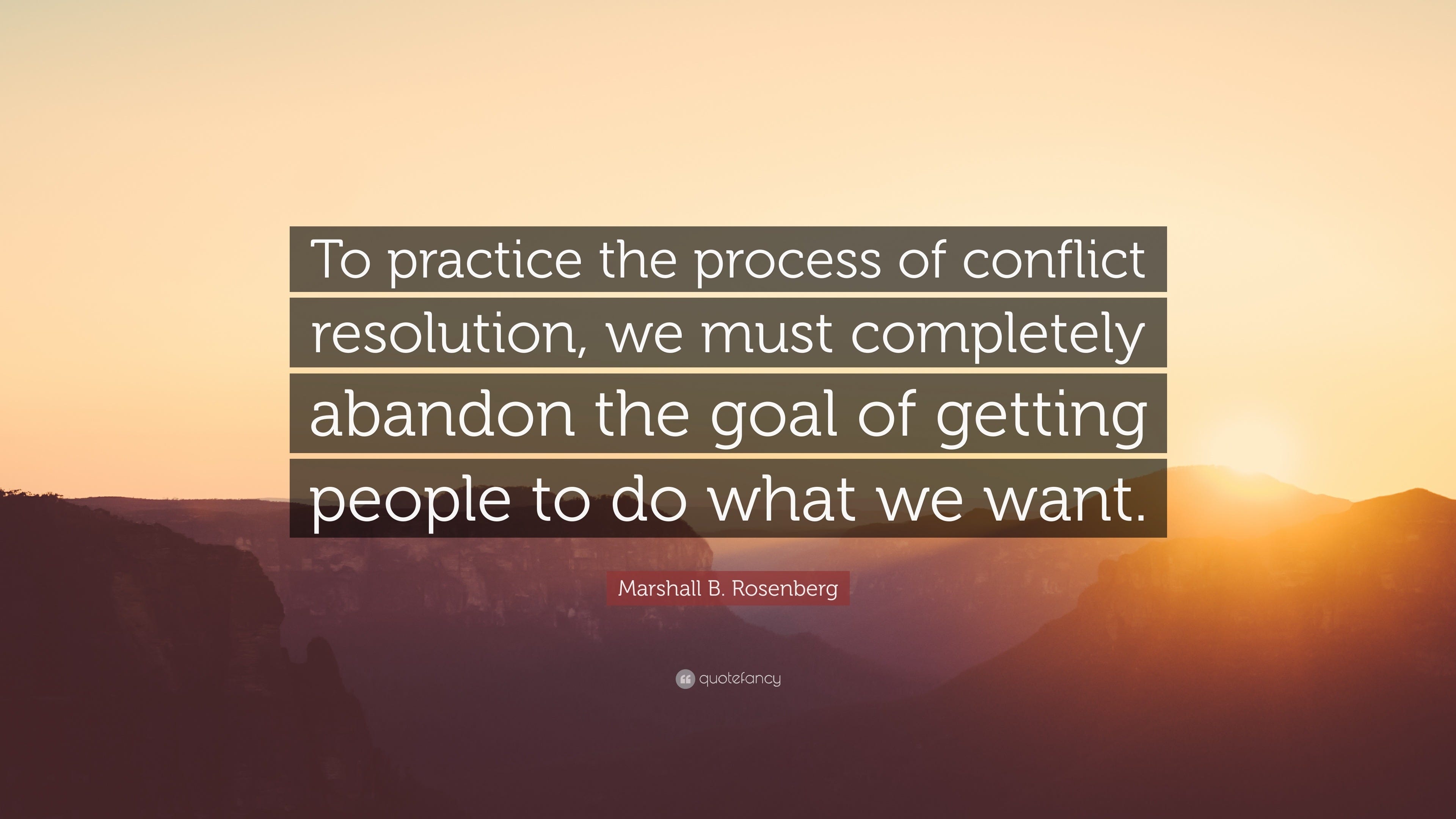
For the Love of Humanity is an online community made up of, and generously supported by, its readers and listeners (like you).
Why become a Supporting Subscriber?
➡️ Receive a loveletter like this every Friday evening. ➡️ Receive new podcast episodes right in your inbox when they drop! ➡️ Participate in Asynchronous Content Club… in the Substack Chat. ➡️ Listen to (5-15 min) Morning Meditations every weekday in the Supporting Subscriber private podcast feed, wherever you get your podcasts. ➡️ Join monthly Fire Circles, via Zoom, to share stories in community. ➡️ Affirm and invest in the value of true philanthropy in your life. ➡️ Provide the financial support needed to make this hopeful project possible… and to help it continue… and grow!
Find For the Love of Humanity elsewhere and join us there too!
➡️ LinkedIn | Facebook | Instagram | Threads | BlueSky ⬅️