


This week, we’re moving beyond talking explicitly about money — as we have been recently. But we’re still advancing that conversation. Because we’re talking about fundraising — one of the historically most money-focused professions on Earth — and how we might transform it…into philanthropy.
Keep reading to find out what I mean….

For You: Today’s Main Course
Most of this won’t be earth-shattering — or at all new — for many of you.
You know these things.
You’ve experienced them.
Or you’ve witnessed them.
But I think it’s worth laying out these truths in one place… before I tell you why we all urgently need to start transforming our fundraising… into philanthropy.
Here’s a summary of the current state of affairs in nonprofits:
Most Donors…
Feel like ATMs (a.k.a are de-humanized). Sure, we fundraisers talk a good game about not treating donors like ATMs… but everything about the “best practices” we learn and perpetuate actually does this. We set dollar goals and pull out all the stops to meet them (thus prioritizing the money). We use commercial marketing and sales as the tactical and strategic models we teach and learn (since they were first adopted decades ago under the paternalistic assumption that nonprofits “need to run more like businesses”). We organize and relate to donors according to how much money they give annually. If donors have something that comes up in their lives so they cannot give that year, we often stop relating to them at all… unless it’s to send a “lapsed donor” message. There really is no relationship with them unless it’s about money — either an immediate exchange of it or strategically working towards it. All of these things and more show donors that their money is what we’re relating to and care about most.
Don’t know what’s really happening in the orgs they give to. I can’t believe how common it is for donors to not even receive a thank you for their gifts! But beyond that, many nonprofits don’t ever send any updates to donors. And those that do send newsletters, e-news, or other updates? They’re almost always in “performance” mode, talking about how hunky-dory everything is and presenting as polished a face as possible. Messes? Problems? Real-life? What’s actually going on inside the org, day-to-day? Not-so-much.
Don’t get more connected to their communities. Most nonprofits treat their donors as “their” donors. They see the relationship as discreet, focused. They relate to them like customers that they are keeping happy. They sometimes even see other nonprofits in the community as “competition.” And they don’t really tell donors anything about how their mission relates to the rest of their community… nor other missions… nor how the community relates to their mission. Usually the best donors can do is just understand the story of one nonprofit’s purpose — which is inherently wildly lacking in the true context of the mission.
Don’t actually have real relationships with nonprofits. This is another one where we talk a good game about building relationships with donors… but in reality? In practice? Inside the typical day-to-day of nonprofits? “Relationships” with donors aren’t real. They lack soul. They’re hollow. Real relationships have authenticity. Mutuality. Accountability. Consistency. Proximity. Genuine care. Nonprofits’ relationships with donors rarely have any of these things.
Most Fundraisers…
Feel like cogs in machines (a.k.a. are de-humanized). There’s pressure to meet dollar goals, on disembodied timelines — usually against their better judgement (i.e. asking donors for gifts before they sense donors are ready, because the calendar/goals are demanding it). There is rarely work/life harmony. Work-related emails, texts, and phone calls find them at home, when they’re with their family, when they’re trying to re-charge on evenings or weekends. Genuine, significant time off? Hardly knew her. Human relationships (by definition one of the messiest realities out there) are subjugated by spreadsheets, project plans, reminder pings from CRMs, in an effort to make them predictable (as if! again: we’re talking human beings, here [a.k.a. mess mongers]!).
Sense the humanity lacking in their work. Trying to do what is essentially the most human work one can do… in a way that is most definitely not human (see above)… tends to create a lot of cognitive dissonance. A friend of mine has lately been talking and writing about moral injury for fundraisers… and that tracks, too. Folks are drawn to their work by something deep in their soul, often… and then sense their soul slowly being drained out of their body by the reality of the work, day by day, bit by bit. No time for tears, or joy. No chance to celebrate wins before it’s on to the next goal. No freedom to actually care for the people they’re in relationship with, both internally and externally… because caring takes time, and spending time on anything but bringing in dollars? That’s a no-no. And even if that’s never said explicitly, it’s always the implicit understanding.
Mainline stress. Stress has become so normalized in the work of fundraising… that it has become like background wallpaper. People have stopped even clocking it, unless it gets turned up to the max. Grant deadlines with thousands-to-millions at stake. Over-stuffed workloads. Clashing personalities. Shuttle diplomacy. Absorbing dissonance — between internal and external expectations; between systems and individuals; between the mission and the actual work — into beings that thrive on harmony. Unrealistic demands. (All of this is of course layered with racism, sexism, homophobia, transphobia, ablism, and other forms of violence for fundraisers who belong to marginalized groups.)
Are dropping like flies. Given all of the above? We shouldn’t be surprised that fundraisers are dropping like flies! Fundraisers’ nervous systems are constantly on high alert. Eighteen months or less is now the standard job tenure for fundraisers. Burnout among fundraisers has become endemic. Not only is no one surprised when someone burns out, but the norm is — rather than actively helping that person recover — to replace them as quickly as possible, so as not to completely miss that year’s budget numbers. Is it any wonder people are being ground to a pulp by environments like this?! This isn’t how we humans were made to live or work.
Most Communities…
Get commodified (a.k.a. de-humanized). Because of how fundraising repurposes commercial marketing and sales strategies and tactics (see above), communities in need of help get packaged and presented like commodities to be “purchased” with money, in order to achieve a personal glow of ego-satisfaction (I mean, don’t most of us want to be seen as generous and caring?). Is there a genuine, full-throated effort to end hunger? No. There’s an effort to “help the hungry.” End homelessness? Naw. Fund shelter for “the homeless.” People and whole communities with endless strengths and beauty… get reduced to problems and deficits, in order to inspire others to see them as worthy of funding.
See the vastness of inequity only growing, not lessening. An under-discussed reality in the fields of fundraising and nonprofits — but something that is proven to be growing more year after year, in national studies — is that the number of total donors has been shrinking, while the total dollars raised have stayed the same or risen slightly. Practically, what does this mean? In short, nonprofits are now relying on more of their budgets… from fewer donors (which creates a significant risk to those budgets). The why, here? Of course, we could attribute this unfolding story to everything mentioned here. I do believe donors stop giving because of the reasons we’re discussing. And it is also true that “the income gap between the rich and everyone else has been growing markedly, by every major statistical measure, for more than 30 years.” So what? Why does this matter? A growing share of the population either can’t really afford to give philanthropically anymore… and/or needs philanthropic help themselves. And meanwhile, a steadily shrinking share of the population has the cash to share philanthropically, while either 1) they just don’t even give; or 2) they do give, and the power their wealth gives them over the work often sets the work off the course it would be on, if it were purely responding to a community in need.
Lack truly collaborative leadership. Many start nonprofits because they have a personal connection to a mission. Rarely do they survey the landscape before they do so, the desire to start “their own” thing is so strong. Relatedly, long-established nonprofits rarely collaborate effectively with other orgs working on similar missions. “Collaboration” is often in name only, consists of a meeting here or there, or is mostly trading Letters of Support back-and-forth for each others’ grant proposals. Powerfully bringing a whole community together to address (and end, for all) an issue like homelessness? Not-so-much. That kind of thing just doesn’t happen. And what a shame!
Suffer under the weight of the same problems, year after year. The end result of all of the above? Nothing changes. New nonprofits are constantly being started. Long-existing nonprofits continue to persist. But the actual problems those nonprofits are addressing? Mostly the same. A bit of a change here or there, maybe. But… mostly the same.
What We All Need Instead
All of that is depressing as all get-out, isn’t it?
I mean, so much good energy and effort is going into “doing good” and “helping our communities,” day after day, week after week, month after month, year after year…
… and not only are our communities being just marginally helped… but many involved in the effort are being harmed in the process.
Does this sound like a love of humanity to you?
Not to me, that’s for sure.
What would a love of humanity actually look like?
What would it look like to transform fundraising… into philanthropy?
Something like this:
The well-being of all of the humans involved in the process is centered and prioritized at every step of the way. Something de-humanizes a staffer or donor? No more. Stopped. Staffers are over-worked? Everyone 1) stops to re-prioritize together; 2) removes de-prioritized work from plates; 3) takes a break before getting back to it. Potential donors are being cavalierly talked about as “prospects”? Everyone stops to remember the story of the org’s founding and mission… and how the life stories of potential donors might weave into it. A tactic to bring in funds commodifies the community? As soon as it’s recognized, it gets pointed out and stopped. Immediately.
Conversations with donors go deep and bring forth the shared humanity of everyone involved. We aim to develop real relationships with donors. Ones that are honest. That talk about hard things. That hold each other accountable. That are mutually nourishing. That shoulder a shared sense of responsibility. That go to the heart of giving — centering our values, our love for each other and our fellow humans, our desires to serve and help. That honor our shared mortality and our desires to leave a positive legacy behind when we’re gone from this Earth. That acknowledge how inescapably, interdependently we are all connected to each other. And that, because of that reality, seek justice and our collective liberation from struggle and inequity.
Staffers live in community with each other, truly mutually supporting each other in every way they can. Staffers aren’t colleagues first. They are humans first. Each one’s human needs are prioritized by the others. And each does everything they can to help others meet those needs. This could be as simple as re-scheduling a meeting readily and amicably. Or showing up for a Meal Train if there’s a new baby, or a sickness. Or not making unnecessary demands of each other. Or refusing to gossip about each other. Or talking directly to each other to resolve any conflict. Or giving each other flexibility wherever possible… and lovingly holding each other accountable to expectations where necessary. Or being honest and direct with each other. Or having each others’ back, if someone is struggling… or harmed by someone else.
Money is secondary to the humanity of everyone involved. Money is no longer used to sort people, nor is it used to characterize the types of relationships we have with them. Volunteers are valued as much as donors (since they’re giving of their very life’s energy, the most precious and nonrenewable resource we all have). Relationships with volunteers and donors are prioritized above what those individuals are or are not giving to the org in the moment — meaning they continue to exist whether or not the volunteering or giving continues, with the understanding that either or both will resume whenever they can. Donors are sorted and related to in categories like their giving priorities; the longitude of their relationship with the org; or qualities of who they are as human beings, rather than simply how much money they give. Efforts are made to build community among the org’s donors, rather than the org simply having individualized relationships with each donor.
Communities aim to collaboratively, actually end their collective problems. Individual egos, and orgs, are set aside to focus on solving problems in whatever way(s) are best for communities. Individuals and orgs readily give up opportunities, and/or funding, if other individuals or orgs would benefit more or are better fits. Ongoing, regular communication streams are designed to help orgs and their workers actively collaborate with each other (think shared Slack workspaces or the like). Regular meetings not just between executives, but elevating and prioritizing and listening to frontline staff and community members being served, are scheduled and held as sacred on everyones’ calendars. Perhaps individual nonprofits are deemed unnecessary (can you imagine?)… and workers and resources organize into pods focused on different aspects of an issue/mission… that are fiscally sponsored by the same org… and thus share their administrative support. This could both increase efficiencies and collaboration.
What else?
What other things seem essential to transforming fundraising… into philanthropy?
Community-Weaving for Fundraisers
Life’s been LIFING lately, yes?! Now is the time to reach out and connect with others. When you’re embedded in supportive community, even the most difficult things don’t seem so hard. Your community is waiting for you!
Advice when you need it. Been-there, done-thats. Commiseration. Support. A place to vent. Guidance and mentoring.
All of this, and more, is what I anticipate happening at Community-Weaving for Fundraisers. Just community-based fundraisers. Gathering for (virtual) lunch together. Twice a month. Year-round. Chatting and supporting each other via WhatsApp in between lunches. Being there for each other.
All you need to do is show up, and be present… while I guide, facilitate, organize, and create the container.
Conversation: Your Response
I really want to know your more detailed thoughts, too. Got more to say? Visit the comments section!
Check out these previously published episodes of the For the Love of Humanity Podcast!
I’m not saying but I’m just saying that, despite how much of a folk hero he is, Vu Le’s episode on the For the Love of Humanity Podcast has not been the number-one-downloaded so far.
That honor has belonged to The Nonprofit Industrial Complex Must Be Composted, since it first aired. That one obviously hit a nerve with y’all!
But…
Slowly but surely, Vu’s episode — Vu Le Enters His Elder Era: Wisdom Incoming! — has been gaining downloads… and it is now TIED for first.
Will Vu pull ahead??
Only time will tell.
Other good episodes to check out right now, before the next episode airs:
Philanthropy’s Final Frontier: Time to Go Deeper Together
Why Does Fundraising Feel So Bad?
Practice: Make It Yours
Pause first, the next time you’re working to help an individual or your community, in any way — whether as a staffer or as a volunteer.
Forget your to-do list. Forget whatever activities you’re about to do. Forget whatever ideas you have about the work.
Just pause.
Take three deep breaths, followed by looooong out-breaths.
Drop your consciousness down into your chest, where the energy center of your heart, your feelings, resides.
Tune in.
Tune into why you’re doing what you’re doing. Tune into how you’ll do what you’re doing. Tune into why it matters to you. Tune into the people you’ll be with, and what seems to motivate and matter to them.
Then, and only then, you can start the work.
BONUS: gather and pause with your colleagues or fellow volunteers first, to share with each other what you experienced during this tuning-in exercise.
Inspiration: Wisdom to Mull Over
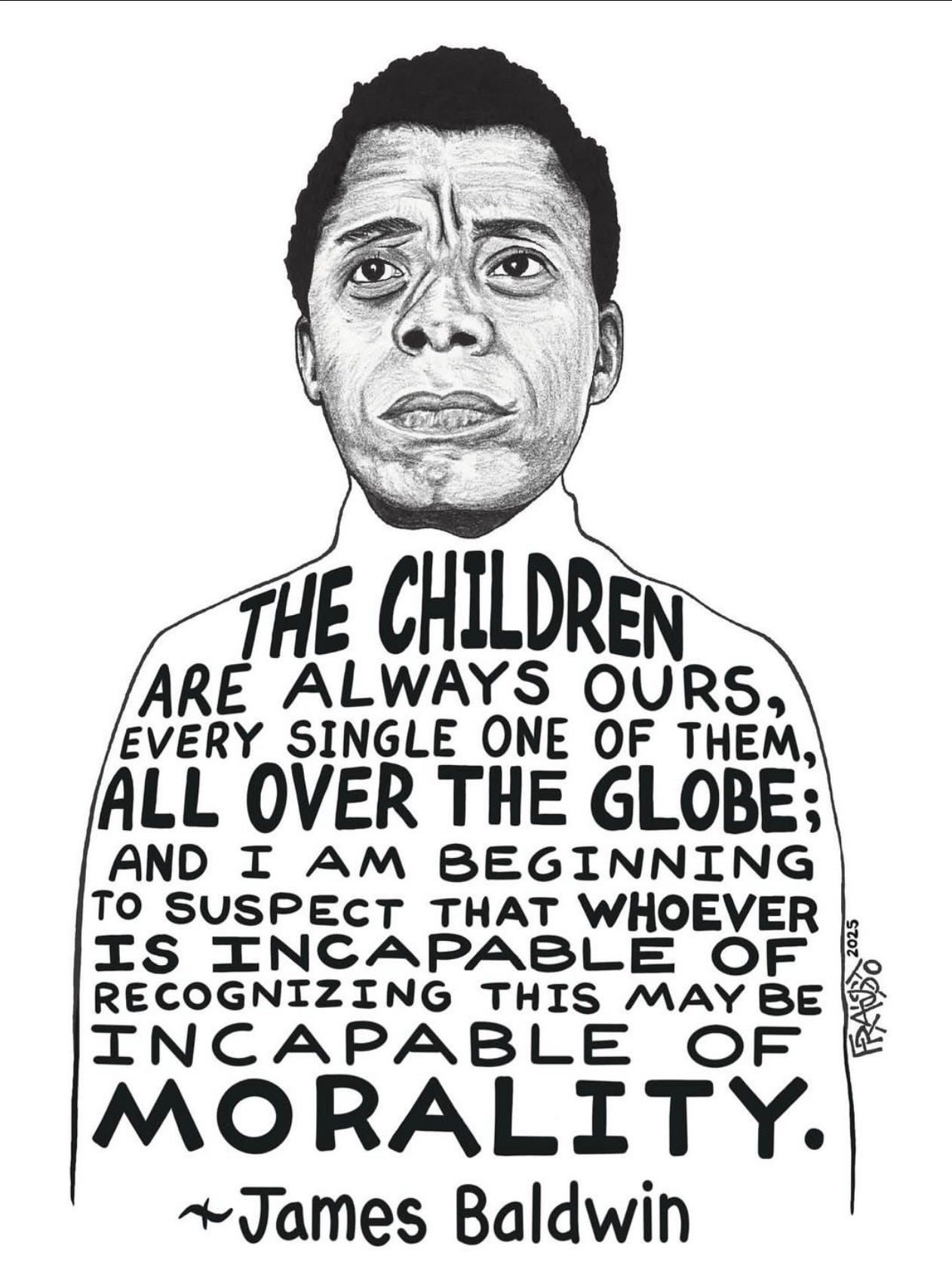
For the Love of Humanity is an online community made up of, and generously supported by, its readers and listeners (like you).
Why become a Supporting Subscriber?
➡️ Receive a Loveletter like this — or a podcast episode! — every Friday. ➡️ Participate in Asynchronous Content Club… in the Substack Chat! ➡️ Listen to Morning Meditations every weekday in the Premium podcast feed, where you get your podcasts. ➡️ Join monthly Fire Circles, via Zoom, to share stories and community. ➡️ Affirm and invest in the value of philanthropy in your life. ➡️ Provide the financial support needed to make this project possible!
Find For the Love of Humanity elsewhere and join us there too!
➡️ LinkedIn | Facebook | Instagram | Threads | BlueSky ⬅️
Really good article One way to do this would be to remember the collective mission in every step, frequently (not every day but frequently)