


I’m a part of two distinct groups of people — White folks and nonprofit professionals — who are especially prone to believing or saying things like this: “I/We don’t do politics.” What does that even mean? Whatever they think it means, people who say this clearly don’t understand that it’s not actually possible to not “DO” politics. Are you a human being living around other human beings? You do politics.
I’ve shaken my head at this misunderstanding for a long time, but let me demonstrate to you exactly how problematic it is through an experience I had in an online group for nonprofit workers this week….
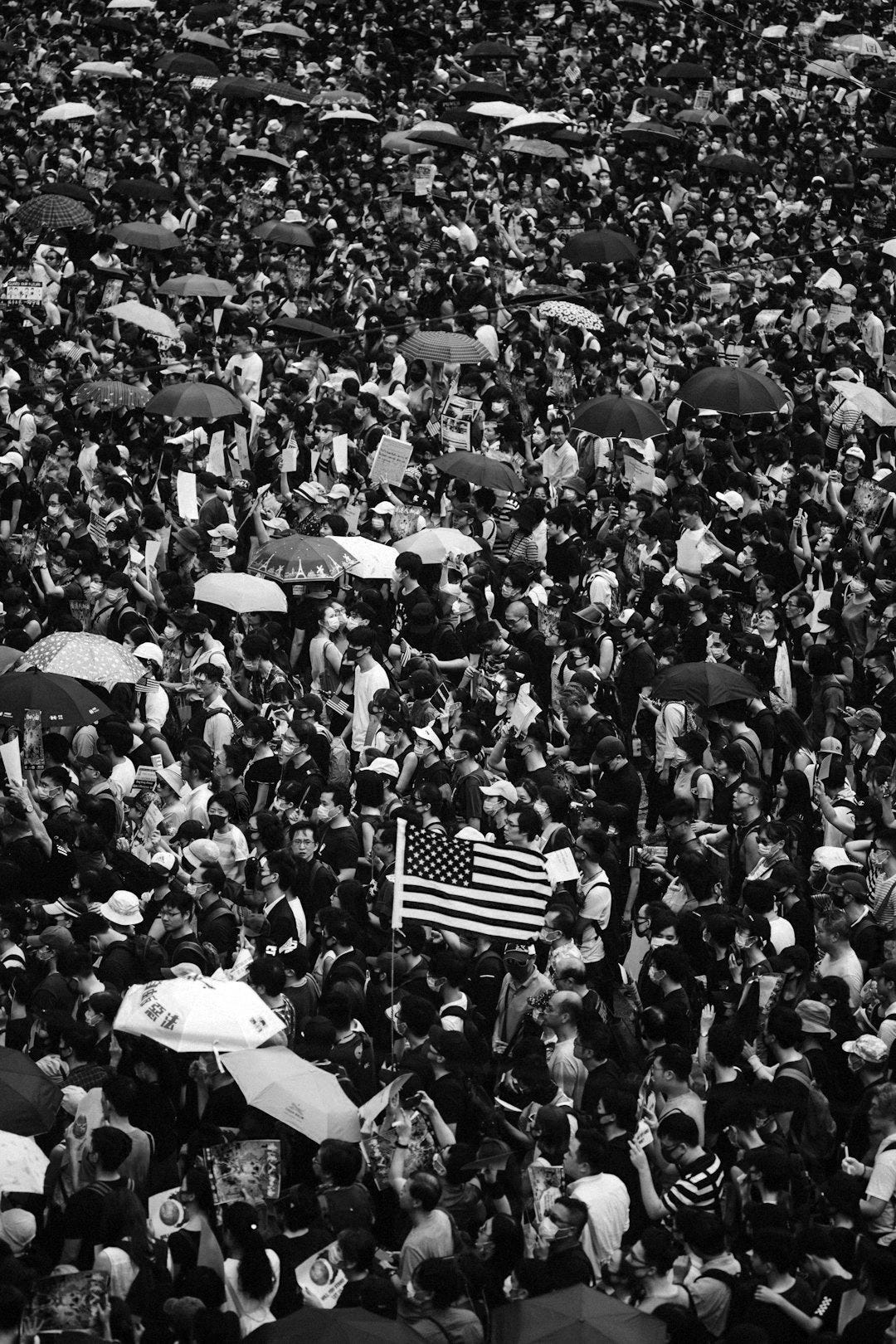
Learning: A Lesson for You
Today is the second Friday in a row that a General Strike has been called for and committed to — across Minneapolis, Minnesota, and the nation.
The results will likely be tabulated in days to come, but my guess is that today’s strike and demonstrations will be even wider-spread, and include much bigger numbers, than last week’s massive strike and demonstrations.
Of course, for a business/organization to determine whether or not to participate can be a complex decision involving many different constituencies and considerations. So of course, leaders often talk to their peers, for the insight they need to plan.
This is exactly what happened in a group of nonprofit professionals that I’m a part of online. A discussion was opened by someone merely wondering how others were approaching these decisions.
Original Poster (OP): I'd love to hear from folks who are participating (or not) in the National Shutdown on Friday, protesting ICE actions. My org is considering making it official and closing for the day. I'm curious what you considered when making that decision. Like, would it adversely affect the wrong people if you closed or skipped work? Are there legal reasons you can't? Are you worried about the consequences? We've got a lot to think about and a very short time to do the thinking!
The first response was from someone who is an Executive Director of an organization and is also an admin of the online group.
1st Response (1R): We are closed and staff are encouraged to go to a protest, strike in their own self-determined way, or spend the day calling legislators to defund ICE. Because $#@! ICE.
2nd Response (2R): As an admin, your behavior is very concerning. Has it ever crossed your mind that this should be an inclusive environment for all nonprofit [pros], and that not all nonprofit [pros] have the same political persuasion as you? Your behavior is abhorrent for an admin of a group like this. How political this group is is very alarming and frankly, inappropriate.
➡️ Let’s pause for a minute, here. ⬅️
The first response simply answered the OP’s question matter-of-factly — until the last sentence. And what I see there is a justified anger (and phraseology) that has been spreading from here in Minneapolis — where we are having real-life, on-the-ground, first-hand experiences of the U.S. federal government’s lawless, violent occupation of our city — as those stories have gotten out to points far and wide.
Anyone who witnesses these stories — with an open mind, I’ll say, not having already pre-determined that the actions are justified, necessary, with merit (as, unfortunately, many people already have) — knows that what’s happening here is wrong.
And thus, they are full of rage, as rage is our natural human response when sacred boundaries have been crossed — especially when those boundaries have been crossed by those who are abusing the power they hold.
That is exactly what is happening here.
In this case, rage is understandable.
Rage is human.
Yet, apparently, 2R was seemingly so disconnected from their own humanity, their inherent sense of what are acceptable — and completely unacceptable — ways to treat our fellow human beings, they somehow overlooked the validity of the rage and focused on its expression, deciding that a cuss word was somehow more of a problem than a tyrannical, violent government terrorizing its citizens.
That is one issue with this response.
The other one, which I’m addressing with this entire post, is the final sentence: “How political this group is is very alarming and, frankly, inappropriate.”
After several people chimed in with support for 1A, I responded.
My Response: Everything about nonprofits is political. How have you convinced yourself otherwise? The need for nonprofits. The way they are funded. The missions they need to pursue. All of it.
And as a Minneapolis resident who has been feeling completely terrorized and traumatized for almost two months now, and especially since the beginning of this year, I feel a sense of profound relief seeing people like 1A seemingly as committed to our community’s violent occupation ending as we are.
We need EVERYBODY — ALL of you here — to be as committed to our collective liberation from this tyranny as we are, if we don’t want to see it spread. If you don’t join us now, this struggle will be happening on your own streets soon... and I guarantee you, you don’t want that. Please help now.
Eventually, 2A responded to me, tersely.
2A: I'm sorry, but not every nonprofit is political.
I had noticed, from looking at the poster’s profile, what their nonprofit employer was about. So I included that consideration in my response.
My Response: Just because you can’t see it doesn’t mean it’s not true. What you may think is “not political”... is definitely political.
Take something like a summer camp, for instance. Who gets to benefit from its programming? Who is excluded, for various reasons? What are folks who come there taught about their place in a community, a country, a world? How was the property acquired? And what is the long-ago history of how that land was stolen from its original indigenous stewards? What might still be owed to those original stewards of the land? Etc.
All of this is political.
2A never responded to the above comment and, after some back-and-forth with other commenters, they exited the group entirely.
That is not the outcome I’d desire.
Rather, I’d have preferred that that person could have listened to all of the feedback they were getting from other group members… and had their eyes opened, realizing that they hadn’t been seeing something as clearly and accurately as they could have.
This is not a difference of opinion.
This is not “I like blue, you like green.”
This is a member of our community completely misunderstanding the reality of the work they’re doing — and the reality of living in, as Dr. King taught us, “an inescapable network of mutuality.”
We can’t simply pretend that’s not true…
… and then it’s not true.
That’s not how this works.
We are in an inescapable network of mutuality.
Whether we live in a city, a small town, or on a farm, we live within inescapable networks of mutuality — whether those look like folks who collaborate to raise a new barn or to put out a fire or to harvest crops; a town supporting a public school that educates all the children that live and grow into adult community members there; or a city organizing a drive to support local businesses because the local economy is suffering from the terror and trauma of a violent invasion.
We need each other.
We are irrevocably interdependent on each other.
Sometimes we give.
Sometimes we receive.
But always, we are connected.
And what we call “politics” is simply how we organize our life together:
Power, control, and influence — who pursues them, who wields them and how, how different individuals and groups compete for them
Who gets access to resources
How different peoples’ needs get prioritized
How we organize our shared life together
Who gets to make decisions that affect everyone — and whether those decisions are made by individuals or collectives, and how
What values are prioritized
How conflict is managed
And more
Politics exist within families, within friend groups, within neighborhood groups, within workplaces, within organizations, within cities, within counties, within states, within and between nations.
But no matter the scale, this is true about politics: believing — or saying — that you don’t “do” politics is actively negligent, considering your irrevocable role as an interdependent cell in a body politic.
You do politics — just via existing as a human being among other human beings. And if you decide to pretend you’re not a part of the politics of your collective, you are denying a reality that cannot be escaped, and thus you are also ignoring and sloughing off the responsibilities you have, as a member of that collective, to all of the others in that collective.
If you’re human, you do politics.
And then, the question remains:
Are your politics going to acknowledge and contribute to and support the collective of which you are an inherent part? Or are you going to stubbornly put your fingers in your ears, close your eyes, and seeing “La La La” while pretending you are a loner island looking out solely for number one?
Because reality is reality, I don’t see the point of fighting it.
The sooner you acknowledge the truth, the sooner you can go about actively, consciously creating a collective life in which we all can thrive.
That is certainly what For the Love of Humanity is about.
Will you join us?
Before new podcast episodes start coming out this year…
… how about you catch up on some you missed last year?
Two in particular seem to go with today’s message:
Ep 10 | Power Is Something You’re Either Giving Away... Or Owning. So: What’ll It Be? Listen in to explore your relationship to power. We’ll talk about the ways that intra- and inter-personal power dynamics… actually affect the big-picture power dynamics we all seem to assume are just “baked into” our wider world.
Ep 11 | Hope for Turtle Island? Right Here. Do you wish you could better understand the approach to community investment brought by the original peoples of North America? Do I have the episode for YOU. Our guest Alexander Sterling is a brilliant, and hilarious, guide showing us how beautiful our life together could be.
Conversation: Your Response
Got more to say? Visit the comments section!
Are you looking for some comrades to commiserate with? How about some peers to level-set something for you? Or someone to help you find what you need… because they did it themself last year? All of this, and more, is what I anticipate happening at Community-Weaving for Fundraisers.
Just fundraisers. Gathering for (virtual) lunch together. Twice a month. Year-round. Chatting and supporting each other via WhatsApp in between lunches. Being there for each other. All you need to do is show up, be present. I facilitate, organize, and create the container.
The Waiting List is open now. Get on it!
Practice: Make It Yours
This practice is what is called a metta meditation, or loving-kindness practice: a 2,500-year-old Buddhist technique designed to cultivate compassion, warmth, and goodwill toward oneself and others by silently reciting and reflecting on a series of positive phrases.
Feel grounded in yourself. Cultivate empathy and compassion. Feel the barriers between you and others dissolve.
1️⃣ Settle into a seated position, relaxed yet alert.
2️⃣ Take several deep breaths, and let them out slowly.
3️⃣ Start quietly focusing on, actively soaking in, and reciting the following phrases to yourself, slowly:
First, tune into yourself, and say this: May I be safe. May I find joy. May my whole being be well. May I be at peace.
Then, picture someone in front of you who is dear to you, someone who you love very much, and say this to them: May you be safe. May you find joy. May your whole being be well. May you be at peace.
Now, expand your awareness to your neighbors, people who live around you, people who you feel mostly neutral towards, but who you regularly see in your daily life. Picture their faces in front of you, and say this to them: May you be safe. May you find joy. May your whole being be well. May you be at peace.
Next, picture someone who you really struggle to relate to, perhaps someone with whom you are in active conflict or struggle. Picture their face in front of you, and say this to them while genuinely wishing them well: May you be safe. May you find joy. May your whole being be well. May you be at peace.
Finally, expand your awareness as wide as you can. Think of and see all of the critters living in the trees around you. See the trees themselves, along with all of the other plants that grow around you. See all of the humans who you know live in your area, sharing a canvas of life with you. Then say this: May all beings be safe. May all beings find joy. May all beings be well. May all beings be at peace.
The more you can slow down… and be fully present… when you are doing this practice, the more you can consciously feel and mean the words, the more this practice will transform you and your relationships to the world, and all the other beings, around you.
Inspiration: Something to Reflect On
Never doubt that a small group of thoughtful, committed citizens can change the world. Indeed, it’s the only thing that ever has.
— Margaret Mead
For the Love of Humanity is an online community made up of, and generously supported by, its readers and listeners (like you).
Your support — whether through a Supporting Subscription, or through leaving a “heart” or a comment on posts, or by sharing published pieces, or simply by bringing your presence here and helping to grow this community — is so appreciated.
Find For the Love of Humanity elsewhere and join us there too!
➡️ LinkedIn | Facebook | Instagram | Threads | BlueSky ⬅️
Really enjoyed this framing.
One thing it made me think about is how often we assume we can “opt out” of systems — politics, institutions, even technology — when in reality persistent systems don’t really allow clean separation.
You don’t have to actively participate to still be shaping or being shaped by what’s happening around you. The coupling is already there.
Feels like a useful reminder that the question isn’t whether we’re inside these dynamics, but how consciously we engage with them.
This article was spot on. I worked for decades from within the confines of the institutional church. I would hear people say that the church, the pulpit, was no place for politics. That the primary document (ie. bible) was not to be interpreted politically even though very early on in the first book you are face to face with kings going to war with each other. The primary character in the gospels is killed at the hands of state power assisted by others who believed he violated their tribal laws and shouldn't participate in their mutual life together. Your quote,'What we call “politics” is simply how we organize our life together,' is precisely the point. Politics is simply the policies, rules, laws that will either assist us in living lives together or living our lives apart, excluding those we might have the power to exclude. Every policy, law draws those lines, those boundaries that help all of us either thrive or die. Everything is politics. We can be honest about that or we can choose to be dishonest about it. Deciding what is right or wrong as groups of people is politics and sets us up to thrive or die together. The primary character in those gospels spoke of bringing to humanity abundant life. I suspect that only happens when we understand our common politics enhance our mutual humanity